
Fanatics Inc.
Project Profile
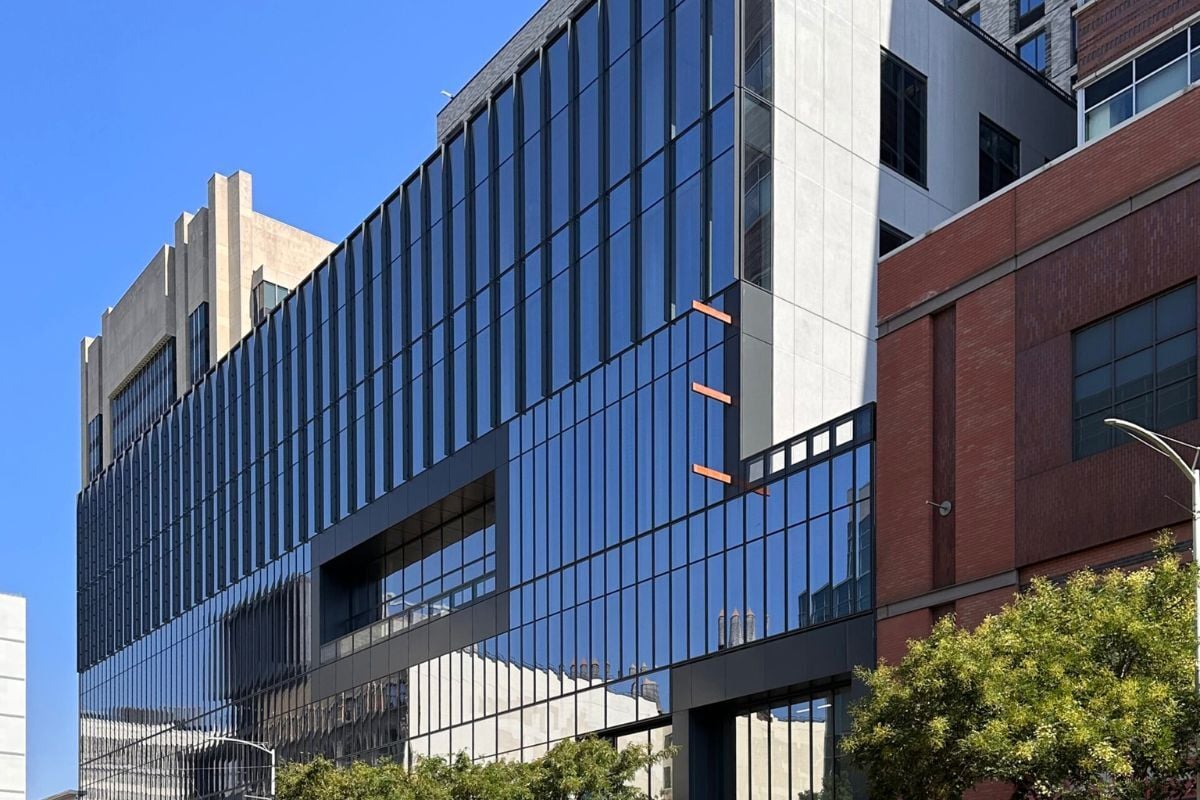
- Total Development: 400,000+ SF mixed-use
- Museum: ~20,000 SF
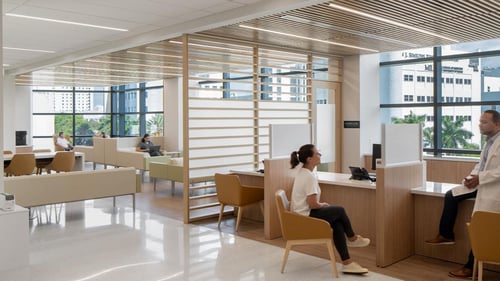
- Community / Institutional: ~55,000 SF
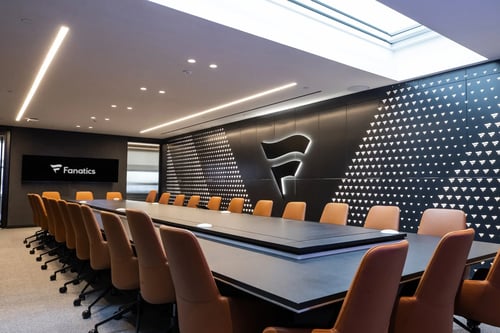
- Headquarters Office: ~75,000 SF
- Delivery: Ground-up, multi-program development
Project Challenges
Meraki was engaged mid-project to stabilize a fragmented FF&E program across multiple environments:
- Multi-budget sequencing across museum, workplace, and community scopes
- No unified cost structure or procurement strategy at time of engagement
- Heavy reuse requirements without defined validation process
- Multi-dealer environment without centralized governance
- Misalignment between FF&E, construction sequencing, and exhibit delivery
Meraki’s Approach
Meraki implemented an integrated cost-control and sequencing strategy, aligning multiple budgets and program types into a single execution framework.
Programming & Cost Control
- Rapid FF&E cost modeling across separate budget structures (museum + workplace + community)
- Deployment of reuse-first strategy across all environments
- Prioritization of high-impact cost reduction opportunities
Procurement & Governance
- Multi-dealer coordination across distinct program budgets
- Centralized cost tracking and procurement discipline
- Contract alignment across scopes
Execution & Integration
- Sequenced delivery across museum and workplace environments, aligned with construction and exhibit timelines
- Coordination across design, exhibit teams, and trades
- Oversight of delivery, installation, and integration
KPIs & Outcome
- ~11% reduction in FF&E spend through cost control + reuse strategy
- Multi-budget alignment achieved across museum and workplace programs
- 100% sequencing alignment with construction and exhibit delivery
- Full governance established across multi-dealer environment
Impact
- Unified separate budget structures into a coordinated delivery strategy
- Integrated reuse across museum and workplace environments
- Eliminated coordination gaps between procurement, construction, and exhibit teams
- Delivered a controlled, performance-driven FF&E program across multiple program types